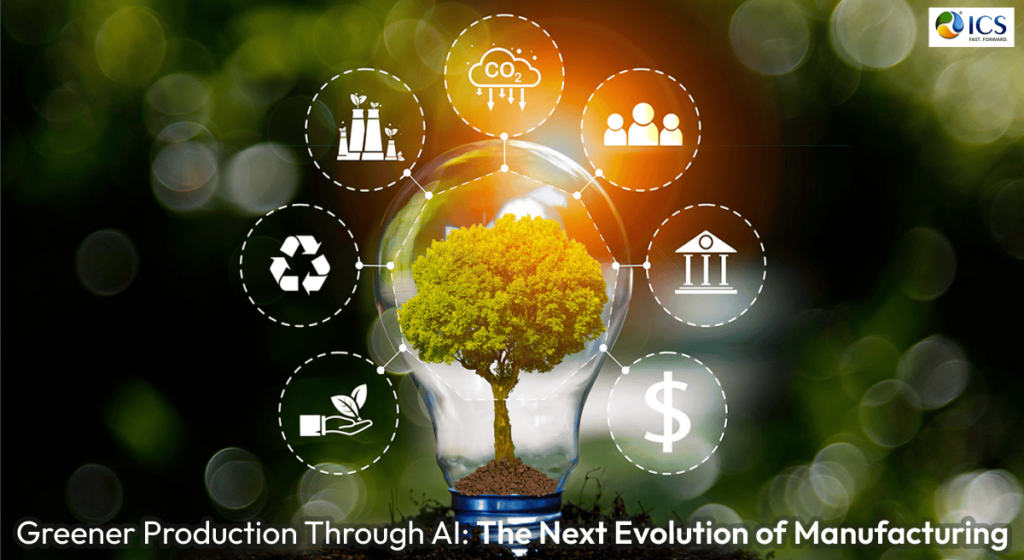
Sustainability is no longer a secondary objective in manufacturing. It has become a business imperative driven by environmental regulations, customer expectations, investor priorities, and the need for long-term operational resilience. Manufacturers today face increasing pressure to reduce waste, lower emissions, improve energy efficiency, and optimize resource utilization without compromising productivity or profitability.
At the center of this transformation is Artificial Intelligence (AI). While AI is often associated with automation and productivity gains, its role in enabling sustainable manufacturing is becoming equally significant. By helping organizations make smarter decisions, optimize processes, and reduce inefficiencies, AI is emerging as a powerful tool in the journey toward greener production.
The next evolution of manufacturing is not just about producing more. It is about producing smarter, cleaner, and more efficiently.
The Sustainability Challenge in Manufacturing
Manufacturing operations consume substantial amounts of energy, raw materials, water, and other resources. Even minor inefficiencies can lead to significant waste over time, increasing both environmental impact and operational costs.
Common sustainability challenges include:
- Excessive energy consumption
- Material waste and scrap generation
- Inefficient production scheduling
- Equipment downtime and maintenance inefficiencies
- High carbon emissions across operations
- Resource-intensive supply chains
Traditional improvement initiatives often rely on periodic audits and manual analysis. While useful, these methods can struggle to identify hidden inefficiencies across complex production environments.
This is where AI provides a distinct advantage.
AI-Powered Process Optimization
One of the most impactful applications of AI in manufacturing is process optimization. AI systems can analyze large volumes of operational data from machines, sensors, production systems, and enterprise platforms to identify opportunities for improvement.
By continuously evaluating performance, AI helps manufacturers:
- Reduce energy consumption during production
- Optimize machine settings for efficiency
- Minimize material waste
- Improve throughput without increasing resource use
Rather than relying on assumptions or historical practices, manufacturers can make decisions based on real-time insights and predictive analytics.
Reducing Waste Through Intelligent Manufacturing
Waste reduction remains a critical sustainability goal. Whether it involves excess raw materials, defective products, or inefficient production runs, waste directly affects both profitability and environmental performance.
AI helps address this challenge by:
- Detecting process variations before defects occur
- Improving quality control through computer vision systems
- Identifying root causes of recurring production issues
- Optimizing production parameters to reduce scrap rates
AI-driven quality monitoring allows manufacturers to catch issues earlier in the process, reducing the need for rework and minimizing material losses.
Energy Efficiency Through Data-Driven Operations
Energy consumption represents a major operational cost and environmental concern for manufacturers. AI-enabled energy management systems provide deeper visibility into how energy is used across facilities and production lines.
These systems can:
- Monitor equipment energy consumption in real time
- Identify inefficient operating patterns
- Optimize production schedules to reduce peak demand
- Recommend operational adjustments for improved efficiency
By continuously analyzing energy performance, AI helps organizations reduce their carbon footprint while lowering operating costs.
Predictive Maintenance for Sustainable Operations
Unexpected equipment failures often lead to production disruptions, emergency repairs, wasted materials, and unnecessary energy consumption. Predictive maintenance uses AI to analyze machine health and anticipate potential failures before they occur.
This approach allows manufacturers to:
- Extend equipment lifespan
- Reduce maintenance-related waste
- Avoid costly breakdowns
- Improve overall equipment effectiveness (OEE)
Predictive maintenance supports sustainability by ensuring assets operate at peak efficiency throughout their lifecycle.
Smarter Supply Chains and Resource Planning
Sustainability extends beyond the factory floor. Supply chains play a major role in determining the environmental impact of manufacturing operations.
AI-powered planning tools improve:
- Demand forecasting accuracy
- Inventory optimization
- Transportation efficiency
- Resource allocation decisions
More accurate forecasting reduces excess inventory and unnecessary production while helping organizations align resources more effectively with actual demand. The result is a more efficient and environmentally responsible supply chain.
Supporting Circular Manufacturing Models
As manufacturers embrace circular economy principles, AI is helping support strategies that prioritize reuse, recycling, and resource recovery.
Advanced analytics can identify opportunities to:
- Reuse production materials
- Improve recycling processes
- Extend product lifecycle performance
- Reduce reliance on virgin materials
These initiatives contribute to long-term sustainability goals while creating additional operational value.
AI and Digital Engineering: Building Sustainability into Design
The environmental impact of a product is influenced long before production begins. Design decisions affect material usage, manufacturability, energy requirements, and lifecycle performance.
AI-assisted engineering tools help design teams:
- Optimize products for material efficiency
- Simulate environmental performance scenarios
- Evaluate design alternatives faster
- Improve manufacturability and resource utilization
This enables sustainability to be integrated into product development from the earliest stages.
Drive Sustainable Manufacturing with ICS
The future of manufacturing will be defined by organizations that can balance productivity with sustainability. AI provides the intelligence needed to reduce waste, optimize resources, and improve operational efficiency while supporting environmental goals.
Contact ICS to learn how we can support your sustainable manufacturing journey.