Gears are fundamental components in automotive systems, industrial machinery, heavy equipment, and power transmission applications. Their performance directly impacts efficiency, reliability, and operational continuity. Even minor gear failures can lead to costly downtime, production losses, and extensive maintenance requirements.
Traditionally, gear failure analysis has relied on periodic inspections, manual diagnostics, and reactive maintenance practices. While these methods remain important, they often detect issues only after significant wear or damage has already occurred. As industries move toward smarter and more connected engineering environments, Artificial Intelligence (AI) is changing how gear failures are identified, analyzed, and prevented.
AI-driven technologies are enabling a shift from reactive maintenance to predictive reliability, helping organizations detect problems earlier and improve long-term gearbox performance.
Why Gear Failures Occur
Gear systems operate under continuous mechanical stress, often in demanding environments involving high loads, vibration, temperature fluctuations, and variable operating conditions. Over time, these factors contribute to different types of gear failures.
Common causes include:
- Excessive wear and surface fatigue
- Misalignment and improper load distribution
- Lubrication breakdown or contamination
- Overloading and shock loading
- Manufacturing or design defects
- Thermal and vibration-related stress
Detecting these issues early is critical to preventing catastrophic failure and minimizing operational disruption.
The Limitations of Traditional Failure Detection
Conventional gear inspection methods typically involve scheduled maintenance, vibration analysis, lubricant checks, and visual inspection. While effective to an extent, these approaches have limitations.
Many failures develop gradually and remain undetected between inspection intervals. Manual analysis can also struggle to identify subtle performance patterns that indicate early-stage degradation.
In high-performance or continuously operating systems, relying solely on periodic inspection increases the risk of:
- Unexpected breakdowns
- Costly downtime
- Reduced equipment lifespan
- Safety and operational concerns
This is where AI-powered monitoring and analysis offer a major advantage.
How AI Improves Gear Failure Detection
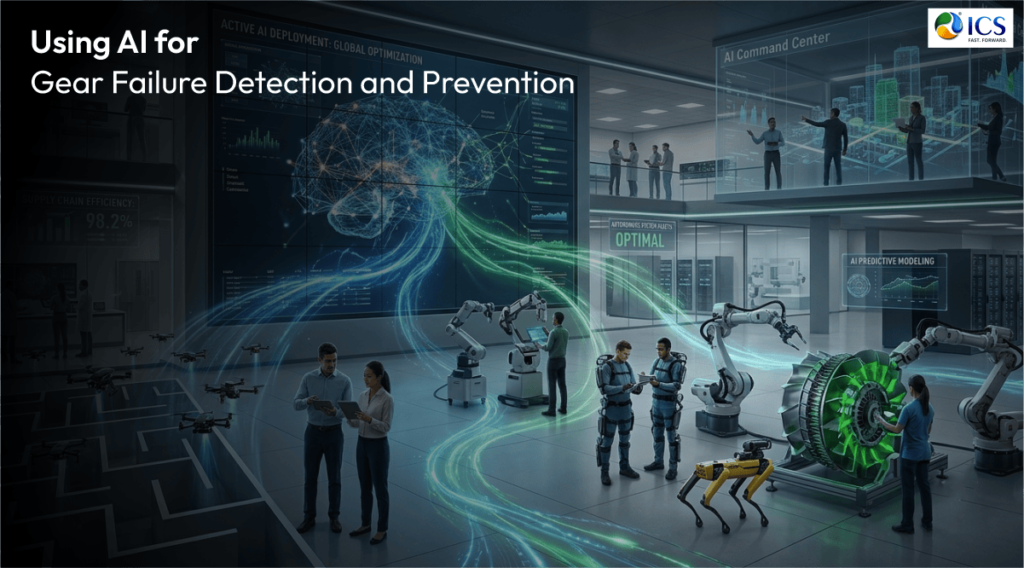
AI systems analyze large volumes of operational data from sensors, monitoring equipment, and machine systems in real time. Instead of simply identifying obvious faults, AI detects hidden patterns and behavioral changes that may indicate developing issues.
AI-driven monitoring platforms can process:
- Vibration signatures
- Acoustic emissions
- Temperature fluctuations
- Lubrication condition data
- Torque and load variations
By continuously learning from operational behavior, AI systems can recognize abnormal conditions earlier than traditional methods.
Predictive Maintenance and Early Warning Systems
One of the most valuable applications of AI in gear systems is predictive maintenance. Rather than waiting for components to fail or relying on fixed maintenance schedules, AI predicts when maintenance is actually needed based on equipment condition.
Predictive maintenance enables organizations to:
- Detect wear progression early
- Schedule maintenance proactively
- Reduce unplanned downtime
- Extend gearbox lifespan
- Improve maintenance efficiency
For industries where downtime directly impacts production or operational continuity, predictive maintenance creates significant operational and financial benefits.
AI-Powered Vibration and Condition Analysis
Vibration analysis has long been used in rotating equipment diagnostics. AI significantly enhances this capability by identifying complex vibration patterns that may not be visible through conventional analysis techniques.
Machine learning algorithms can distinguish between:
- Misalignment issues
- Tooth wear and pitting
- Bearing-related problems
- Lubrication deficiencies
- Load imbalance conditions
This level of precision improves diagnostic accuracy and helps maintenance teams address root causes rather than symptoms.
Reducing Downtime and Improving Reliability
Unexpected gearbox failures can halt operations, damage connected equipment, and create expensive repair cycles. AI helps reduce these risks by improving reliability through continuous condition monitoring and data-driven insights.
Benefits include:
- Faster fault detection
- Reduced maintenance costs
- Improved operational uptime
- Better asset utilization
- More informed engineering decisions
As AI systems gather more operational data over time, their predictive accuracy continues to improve, creating smarter and more resilient maintenance strategies.
The Role of AI in Gear Design Optimization
AI is not only improving maintenance. It is also influencing how gears are designed. Advanced simulation and AI-assisted analysis tools help engineers optimize gear geometry, load distribution, lubrication pathways, and material selection during the design phase.
This enables:
- Better durability prediction
- Improved efficiency and NVH performance
- Reduced stress concentrations
- More optimized gearbox configurations
AI-supported engineering workflows help create gear systems that are both higher performing and more reliable from the outset.
ICS: Supporting Intelligent Gear Engineering Solutions
At ICS, we combine advanced engineering expertise with intelligent digital tools to support more reliable and optimized gear system performance. Our approach focuses on improving durability, efficiency, and operational reliability through data-driven analysis and modern engineering methodologies.
ICS supports organizations with:
- Gear and gearbox design analysis
- Simulation-driven performance optimization
- AI-assisted condition analysis workflows
- Engineering support for predictive maintenance strategies
- Reliability-focused design improvements
Partner with ICS to improve gear reliability through intelligent engineering, advanced analysis, and AI-enabled optimization strategies. Contact ICS to learn more about our engineering and design services.