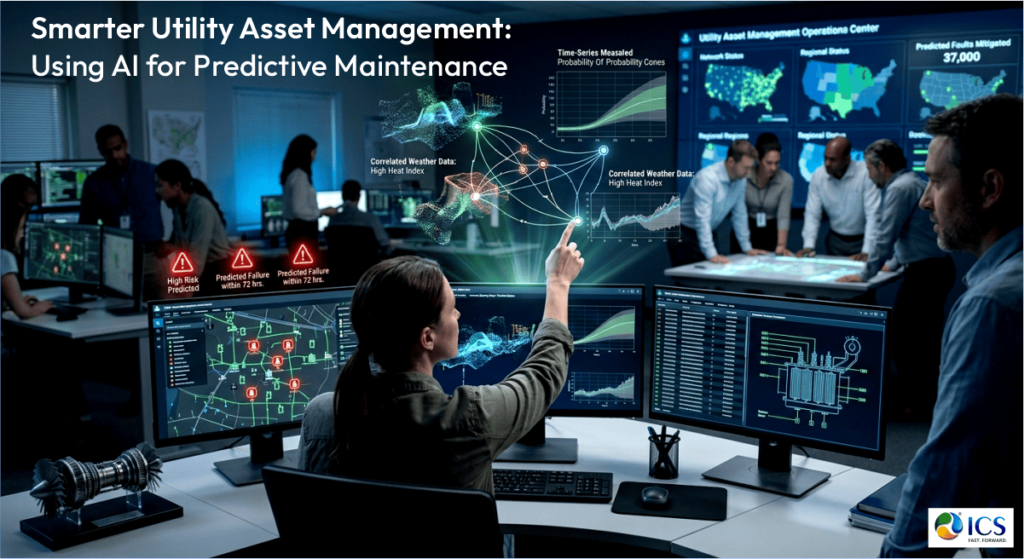
Utility infrastructure is built to last, but even the most reliable assets require continuous monitoring and maintenance. Power lines, substations, transformers, distribution networks, and other critical infrastructure operate under changing environmental conditions and varying loads. Over time, wear and tear can affect performance, increase operational costs, and create the risk of unexpected failures.
Traditional maintenance strategies often rely on fixed schedules or reactive repairs. While these approaches serve a purpose, they can leave utilities dealing with unnecessary maintenance expenses or discovering problems only after equipment performance has deteriorated.
Artificial intelligence (AI) is changing this approach. By analyzing asset data, identifying patterns, and predicting potential failures, AI is helping utilities move toward more proactive, condition-based maintenance. When combined with accurate asset information and geospatial intelligence, it can support better maintenance planning, improved reliability, and more informed infrastructure decisions.
Why Traditional Utility Maintenance Needs a Rethink
Utility networks are becoming more complex as infrastructure expands, demand patterns shift, and extreme weather events place additional pressure on existing assets.
Time-based maintenance can result in servicing equipment that is still operating efficiently, while reactive maintenance may allow developing issues to go unnoticed until they cause disruptions. Both approaches can affect budgets, workforce availability, and service reliability.
The challenge is knowing which assets need attention, when intervention is necessary, and how maintenance resources should be allocated.
This is where predictive maintenance becomes valuable. Instead of relying entirely on fixed schedules or visible signs of failure, utilities can use data to assess asset health and anticipate potential problems before they escalate.
How AI Is Transforming Predictive Maintenance
AI-driven predictive maintenance uses historical records, real-time sensor data, inspection reports, and operational information to identify patterns associated with equipment deterioration and failure.
For example, AI models can analyze transformer temperature, electrical load, vibration, and other operating parameters to identify unusual behavior. In power distribution networks, data from inspections and monitoring systems can help reveal signs of aging infrastructure or developing faults.
Machine learning models can also compare current asset conditions with historical failure patterns to estimate the likelihood of future problems. These insights help maintenance teams prioritize inspections, schedule interventions, and make more informed decisions about repairs or replacements.
However, predictive models are only as dependable as the data and assumptions behind them. Engineering expertise and field verification remain essential to ensure that AI-generated insights translate into safe and effective maintenance decisions.
Turning Asset Data into Actionable Intelligence
One of the biggest challenges in utility asset management is fragmented information.
Asset records, inspection reports, maintenance histories, geographic information systems (GIS), and monitoring platforms may operate in separate environments. When these systems are disconnected, it becomes difficult to build a complete picture of asset health and operational risk.
AI can help bring these information sources together by identifying patterns across datasets, organizing records, and highlighting relationships that might otherwise be overlooked.
GIS adds another important dimension by connecting asset information to its physical location. Utilities can use spatial data to understand where assets are concentrated, identify infrastructure exposed to environmental risks, and prioritize maintenance based on location-specific conditions.
When AI-driven analysis is combined with reliable GIS and asset data, utilities gain a more comprehensive view of infrastructure performance and maintenance requirements.
From Emergency Repairs to Risk-Based Maintenance
Predictive maintenance becomes particularly valuable when utilities need to manage large asset networks with limited resources.
AI can help assess asset condition, estimate failure risks, and identify equipment that may require closer inspection. Maintenance teams can then prioritize interventions based on asset criticality, potential service disruption, safety considerations, and repair costs.
For example, an aging transformer serving a critical facility may require more immediate attention than an asset with similar age but lower operational importance.
This risk-based approach helps utilities move beyond treating every asset equally. It supports more targeted maintenance planning, better workforce allocation, and more effective use of maintenance budgets.
Improving Resilience Against Environmental Risks
Utility assets are increasingly exposed to environmental pressures such as extreme heat, heavy rainfall, flooding, and storms.
AI can help utilities analyze weather patterns, historical outage records, asset condition, and geographic information to identify infrastructure that may be more vulnerable to these events.
When combined with GIS-based mapping, this information can support risk assessments, inspection planning, and infrastructure resilience strategies.
For instance, utilities can identify assets located in flood-prone areas or regions exposed to recurring weather-related disruptions and prioritize preventive measures accordingly.
Although AI cannot eliminate environmental risks, it can help utilities make better-informed decisions about where to strengthen infrastructure and how to prepare for potential disruptions.
Building a Smarter Utility Asset Management Strategy
Successful AI adoption requires more than implementing predictive analytics software. Utilities need reliable asset inventories, consistent data standards, connected information systems, and clear maintenance processes.
A practical starting point is to identify critical assets and recurring maintenance challenges. From there, organizations can evaluate available data, introduce predictive analytics for selected asset categories, and measure results such as reduced unplanned downtime, improved inspection efficiency, and maintenance cost savings.
Human expertise must remain central to the process. AI should support engineers and maintenance teams with timely insights, while final decisions continue to account for safety, regulatory requirements, and operational realities.
How ICS Supports Smarter Utility Infrastructure
ICS helps utilities strengthen infrastructure planning and management through digital utility services, spatial solutions, grid solutions, and geospatial expertise.
By supporting better access to asset information and more effective use of spatial data, ICS helps organizations build a stronger foundation for informed infrastructure decisions. Combined with emerging AI capabilities, these approaches can support more proactive maintenance planning, improved asset visibility, and more resilient utility networks.
The Future of Utility Maintenance Is Predictive
As utility networks grow more complex, maintaining infrastructure through fixed schedules and reactive repairs alone becomes increasingly challenging.
AI-powered predictive maintenance offers a way to identify potential problems earlier, prioritize critical assets, and make better use of maintenance resources. When supported by accurate data, GIS intelligence, and sound engineering judgment, it can help utilities shift from responding to failures toward anticipating them.
Explore ICS Utilities Services to strengthen your approach to spatial intelligence, infrastructure planning, and smarter utility operations.