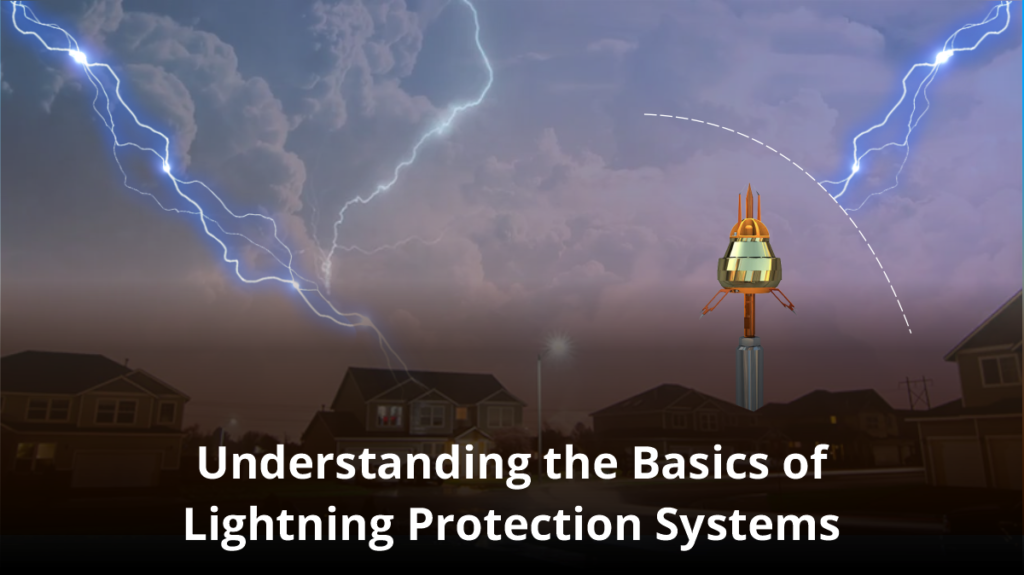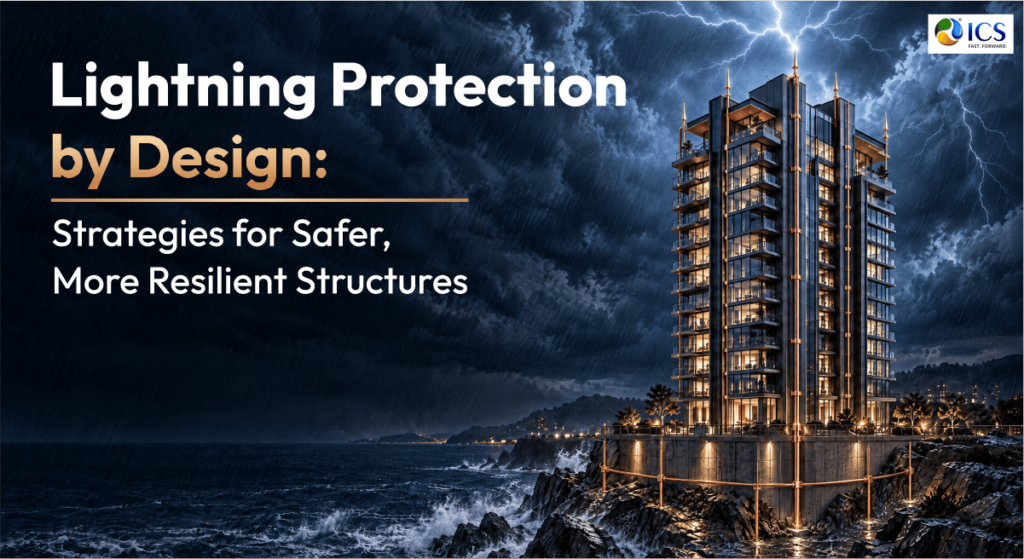
Lightning protection starts long before a storm hits. It begins with sound engineering, thoughtful design, and a clear understanding of the risks a structure faces. A lightning strike can damage building components, disrupt electrical and communication systems, cause fires, and threaten the safety of occupants. For critical infrastructure, the consequences can extend to equipment downtime, service interruptions, and costly repairs.
Protecting a structure therefore requires more than installing a lightning rod on the roof. An effective lightning protection system must provide a coordinated path for lightning current to travel safely toward the ground while helping limit dangerous voltage differences and reducing the risk of damage to connected systems.
Start with a Clear Assessment of Lightning Risk
Every structure presents a different set of lightning protection challenges. Building height, location, surrounding terrain, construction materials, occupancy, and the sensitivity of internal equipment can all influence the protection strategy.
A comprehensive risk assessment helps engineers understand the likelihood and potential consequences of a lightning strike. A tall industrial facility, a commercial building with sensitive electronic systems, and a critical infrastructure site may require different design considerations even when they are located in the same region.
The assessment should consider structural damage, fire risk, threats to occupants, and possible disruption to electrical and electronic systems. Applicable standards and project requirements help determine the appropriate level of protection.
Starting with risk assessment allows engineers to develop a system suited to the structure rather than relying on a generic installation approach.
Air Terminals: Establishing the Point of Interception
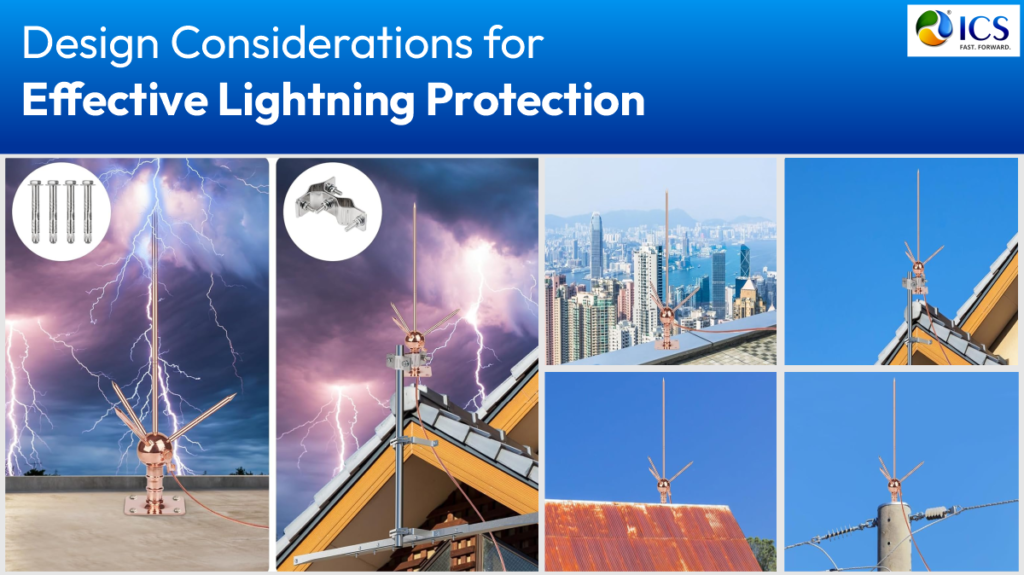
Air terminals, commonly known as lightning rods, form one part of an external lightning protection system. Their purpose is to provide designated interception points for lightning strikes and connect them to the system’s conductive path toward earth.
Their placement and arrangement must account for the structure’s geometry, roof layout, height, and features that may be exposed to lightning. Equipment rooms, rooftop installations, elevated sections, and other prominent features may require particular attention.
Simply placing a terminal at the highest point does not automatically guarantee adequate protection for every part of a building. Engineers must assess the required protection coverage using the applicable design method and standard.
Careful positioning helps establish a coordinated system that addresses the structure’s exposure while supporting safe current conduction.
Down Conductors: Providing a Controlled Path to Ground
Once lightning current is intercepted, it needs a suitable path from the air terminals toward the grounding system. Down conductors provide this connection.
Their routing is an important engineering consideration. Conductor paths should be designed to avoid unnecessary length, sharp bends, and poorly planned connections that can affect current distribution. The number, placement, and configuration of down conductors depend on the protection design, structure, and applicable requirements.
Engineers must also consider separation from other conductive systems and the potential for dangerous side-flashing, where a voltage difference causes a discharge between the lightning protection system and nearby metalwork or services.
A well-designed conductor network helps direct lightning current along the intended route while reducing risks to the building and its occupants.
Grounding: Completing the Protection System
The grounding system provides the connection between the lightning protection network and the earth. Its performance is influenced by soil conditions, electrode arrangement, site layout, and the design of the overall earthing system.
Grounding cannot be treated as an isolated component. It must work with the air terminals, down conductors, bonding arrangements, and other earthing systems associated with the structure.
Engineers need to consider soil resistivity, electrode placement, connection integrity, and the potential for dangerous ground potential differences during a lightning event. A single resistance measurement, on its own, does not establish that a complete lightning protection system is safe. The overall design and compliance with relevant requirements remain essential.
For facilities with sensitive electrical and electronic equipment, grounding coordination is particularly important because lightning-related surges can affect systems even when the building structure itself is not visibly damaged.
Equipotential Bonding and Surge Protection
Lightning current can create substantial voltage differences between nearby conductive components. Equipotential bonding helps reduce these differences by connecting appropriate metallic services, structural metalwork, and other conductive elements in accordance with the protection design.
Surge protection devices (SPDs) provide another important layer of protection. Lightning-related surges can enter through power lines, communication cables, and other connected services, potentially damaging control systems, computers, industrial electronics, and monitoring equipment.
External lightning protection and internal surge protection serve complementary purposes. A complete strategy considers both the physical structure and the electrical systems operating within it.
The appropriate bonding and SPD arrangements depend on the installation, equipment sensitivity, exposure, and applicable standards.
Designing to Applicable Standards
Lightning protection must follow recognized standards and the requirements relevant to the project and jurisdiction. The IEC 62305 series addresses protection against lightning, including risk management, physical damage, life hazards, and protection of electrical and electronic systems.
NFPA 780 is another widely used standard for lightning protection systems in applicable projects, particularly in North American contexts. The appropriate standard depends on the location, building type, project specifications, and governing regulations.
Standards guide risk evaluation, system design, installation, and verification. Engineers must determine which requirements apply and coordinate the lightning protection design with the building’s electrical, structural, and other relevant systems.
How ICS Supports Safer Structures
Effective lightning protection is an engineering discipline that requires careful assessment, coordinated system design, and attention to the building’s wider infrastructure.
ICS provides Lightning Protection Design services to support the development of protection strategies tailored to project requirements. By considering the structure, grounding arrangements, conductive paths, and relevant design requirements, ICS helps clients address lightning-related risks through a planned engineering approach.
Protection Begins with Good Design
Lightning cannot be prevented, but its potential impact can be managed through a properly designed protection system. Risk assessment, air terminals, down conductors, grounding, equipotential bonding, and surge protection must work together as parts of a coordinated strategy.
Build resilience into your project before the storm arrives. Explore ICS Lightning Protection Design services to support safer structures and more reliable infrastructure.
Make the opening more distinctive
I’d open with a stronger engineering angle rather than the familiar “lightning protection starts before a storm” line.
A lightning strike lasts only a fraction of a second. The damage it leaves behind can take weeks to repair.
From compromised electrical systems and damaged equipment to fires and infrastructure downtime, the consequences of a strike depend heavily on how well a structure has been designed to handle it. A lightning protection system cannot prevent a strike, but it can help control where the current travels and reduce the risk of damage.
That protection is engineered into the structure long before installation begins. It requires a clear assessment of lightning exposure, carefully positioned air terminals, properly routed down conductors, effective grounding, and coordinated bonding and surge protection. When these elements work together, they form a protection strategy designed around the structure’s specific risks, rather than a one-size-fits-all solution.