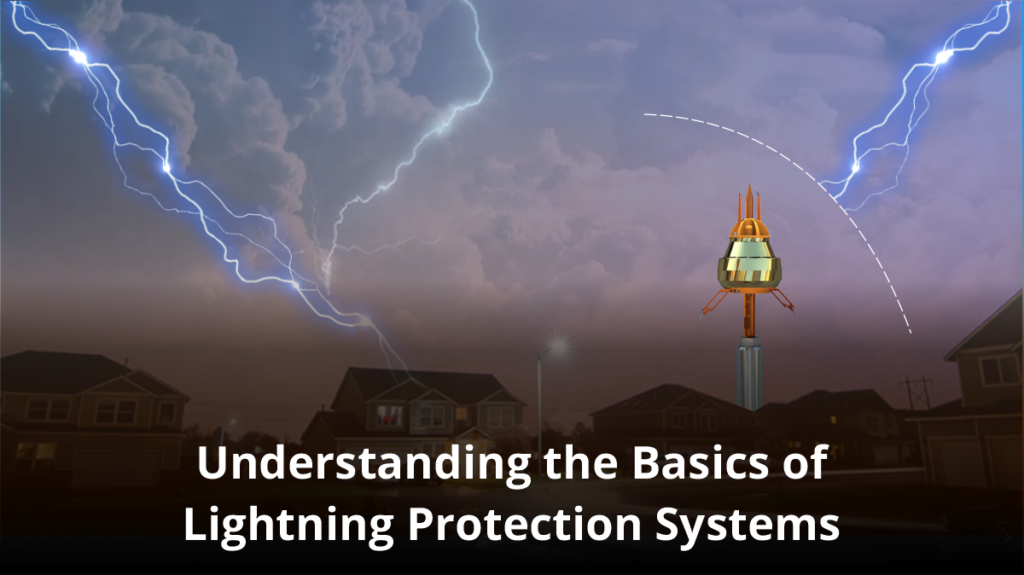
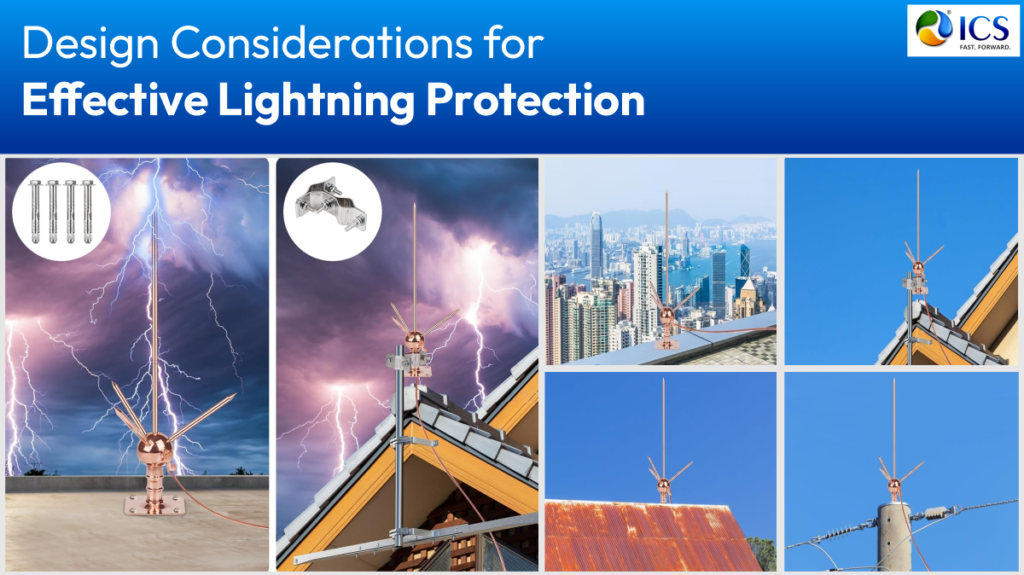
Lightning protection has traditionally been viewed as a static safety measure: air terminals, down conductors, grounding, and compliance with established standards. While these fundamentals remain essential, the reality in 2026 is far more complex. Modern structures are taller, denser, and packed with sensitive electronics, automation systems, and interconnected networks. As a result, the consequences of lightning strikes now extend well beyond physical damage.
Today, lightning protection is evolving into a data-driven, digitally engineered discipline, increasingly influenced by artificial intelligence (AI), advanced simulations, and integrated design methodologies.
From Prescriptive Layouts to Intelligence-Led Risk Assessment
One of the most important shifts in lightning protection design is the move from generic layouts to site-specific, intelligence-led risk assessment. Standards such as IEC 62305 already emphasize risk evaluation, but in 2026, AI-enhanced analytics are making these assessments more precise.
By analyzing large datasets—historical lightning activity, geographic conditions, soil resistivity data, and asset criticality—AI-supported tools help engineers better understand exposure levels and consequence severity. This allows for smarter prioritization of protection measures, especially for critical facilities such as utilities, data centers, industrial plants, and transportation infrastructure. Rather than overdesigning or underestimating risk, engineers can now make informed, performance-based design decisions.
AI-Enhanced Modeling and Simulation
Advances in AI-assisted simulation are also transforming how lightning protection systems are designed. Traditional modeling methods often require multiple manual iterations to test different strike scenarios and conductor configurations.
In 2026, AI-enhanced tools can:
- Rapidly simulate multiple lightning strike scenarios
- Identify potential weak points in conductor routing or grounding paths
- Optimize layouts for complex geometries and tall structures
This results in faster design cycles, fewer assumptions, and greater confidence in system performance before construction even begins.
Deeper Integration with BIM and Digital Engineering
Lightning protection design is no longer isolated from the broader engineering workflow. Building Information Modeling (BIM) plays a critical role in integrating lightning protection into architectural, structural, and MEP designs.
When combined with AI-assisted clash detection and optimization, BIM enables:
- Early coordination of air terminals and down conductors
- Reduced installation conflicts on site
- Improved constructability and maintenance access
- Clear visualization for stakeholders
This integrated approach ensures lightning protection is treated as a core system, not an afterthought.
Smarter Grounding and Earthing Strategies
Grounding remains the foundation of any effective lightning protection system. What has changed is how grounding systems are analyzed and validated. AI-assisted analysis tools can process soil resistivity data, environmental conditions, and historical performance to help engineers design grounding systems that perform reliably over time.
This is especially important in challenging soil conditions or large-scale utility and industrial environments, where grounding performance directly impacts safety and equipment protection.
AI’s Role in Lifecycle Performance and Maintenance
While lightning protection systems are largely passive, AI is increasingly influencing inspection and maintenance strategies, particularly for critical infrastructure. Data from surge events, inspections, and monitoring systems can be analyzed to identify patterns and early signs of degradation.
This supports:
- Smarter inspection planning
- Improved documentation for compliance and audits
- Better long-term performance assurance
Lightning protection is no longer a “design-and-forget” system; it is becoming part of a broader resilience and asset management strategy.
Lightning Protection as Part of System Resilience
In 2026, lightning protection is closely aligned with operational resilience. Downtime caused by lightning-induced failures can disrupt power distribution, communications, manufacturing, and public services. Engineers are therefore designing protection systems not only to meet safety requirements, but also to support uptime, reliability, and continuity.
AI-driven insights help align lightning protection design with broader risk management and resilience objectives.
ICS: Engineering Intelligent Lightning Protection Designs
At ICS, lightning protection is approached as a precision engineering discipline supported by digital tools and intelligence-led methodologies. We focus on designing systems that are compliant, coordinated, and aligned with the realities of modern infrastructure.
Our lightning protection design services include:
- Risk-based assessments aligned with IEC 62305
- BIM-integrated lightning protection layouts
- Grounding and earthing system engineering
- Surge protection coordination
- Design documentation to support compliance, safety, and resilience
Designing Safer Systems Starts with Smarter Engineering
As lightning protection continues to advance, intelligent design is no longer optional. By combining engineering expertise with AI-enabled analysis and digital coordination, organizations can achieve safer, more resilient systems. Partner with ICS for lightning protection design services engineered for today’s complex, technology-driven environments.