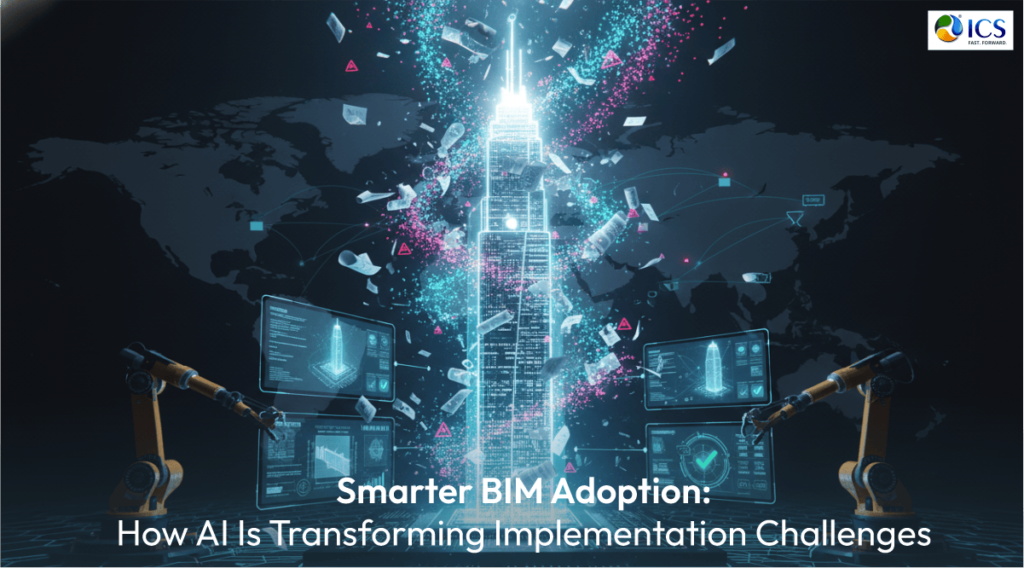
Building Information Modeling (BIM) has become a cornerstone of modern engineering and construction. Most organizations today recognize its value in improving coordination, visualization, and project outcomes. Yet, despite widespread adoption, many teams still struggle to fully realize its potential. The challenge is no longer whether to use BIM—it is how to implement it effectively.
From fragmented data and coordination gaps to time-intensive workflows, BIM implementation often falls short of expectations. This is where artificial intelligence (AI) is beginning to play a critical role. By enhancing how BIM models are created, analyzed, and managed, AI is helping organizations move from basic adoption to truly intelligent execution.
The Reality of BIM Implementation Challenges
While BIM promises better collaboration and efficiency, real-world implementation can be complex. Projects often face issues such as:
- Disconnected data across teams and disciplines
- Time-consuming clash detection and coordination cycles
- Inconsistent modeling standards
- Limited visibility into project risks and performance
- Manual, repetitive design and documentation tasks
These challenges reduce the overall value BIM is meant to deliver. In many cases, teams spend more time managing the model than leveraging it for better decision-making.
AI as an Enabler, Not a Replacement
AI does not replace BIM—it enhances it. By embedding intelligence into BIM workflows, AI helps automate repetitive tasks, improve accuracy, and generate insights that were previously difficult to obtain.
The result is a shift from static models to dynamic, data-driven systems that actively support project delivery.
Smarter Clash Detection and Coordination
Clash detection is one of the most critical yet time-intensive aspects of BIM. Traditional methods identify conflicts, but they still require significant manual effort to interpret and resolve them.
AI enhances this process by:
- Prioritizing clashes based on severity and impact
- Identifying patterns in recurring conflicts
- Suggesting optimized routing or design adjustments
This reduces coordination cycles and helps teams resolve issues faster, often before they escalate into costly on-site problems.
Improved Data Management and Model Quality
One of the biggest barriers to effective BIM implementation is poor data quality. Inconsistent inputs, missing information, and unstructured datasets limit the usefulness of BIM models.
AI-driven tools can:
- Automatically validate model data against predefined standards
- Detect inconsistencies and missing parameters
- Structure and organize large datasets for easier access
This ensures that BIM models are not only visually accurate but also reliable sources of information for decision-making.
Predictive Insights for Better Decision-Making
Traditional BIM workflows are largely reactive. Teams identify issues after they appear and then work to resolve them. AI introduces a predictive layer to BIM, enabling teams to anticipate problems before they occur.
By analyzing historical data, project patterns, and real-time inputs, AI can:
- Highlight potential design conflicts early
- Predict delays based on workflow trends
- Identify high-risk areas in complex projects
This proactive approach improves planning, reduces uncertainty, and enhances overall project performance.
Automating Repetitive Design Tasks
BIM modeling often involves repetitive and time-consuming tasks such as generating layouts, updating drawings, or managing revisions. AI helps streamline these processes by automating routine activities.
This allows engineers and designers to focus on higher-value work, including problem-solving, optimization, and innovation. Productivity increases not just through speed, but through better allocation of human effort.
Enhancing Collaboration Across Teams
BIM is inherently collaborative, but coordination challenges still arise due to communication gaps and siloed workflows. AI supports better collaboration by providing clearer insights and more structured information.
For example:
- Automated reporting highlights key issues for stakeholders
- Intelligent dashboards provide real-time project visibility
- Data-driven recommendations align teams on decision-making
This improves alignment across disciplines and reduces misunderstandings during project execution.
Integrating AI with BIM for Scalable Implementation
For organizations looking to scale BIM effectively, integrating AI into workflows is becoming increasingly important. However, successful implementation requires more than just tools—it requires the right design approach, data structure, and coordination strategy.
Projects must be designed with:
- Clear BIM standards and protocols
- Structured data frameworks
- Integration between design, engineering, and digital systems
Without this foundation, even the most advanced tools may fail to deliver value.
ICS: Enabling Intelligent BIM Implementation
At ICS, we approach BIM as more than a modeling tool—it is a strategic enabler for better project outcomes. By integrating AI-driven methodologies into BIM workflows, we help organizations overcome implementation challenges and unlock real value.
Our BIM services include:
- BIM modeling and coordination across disciplines
- AI-enhanced clash detection and validation
- Data structuring and model standardization
- Integration with digital engineering workflows
- Support for complex infrastructure and industrial projects
Build Smarter with ICS BIM Solutions
BIM adoption is only the first step. True value comes from intelligent implementation that improves efficiency, reduces risk, and enhances collaboration. Partner with ICS to leverage AI-enabled BIM solutions that turn complex projects into coordinated, high-performance outcomes.