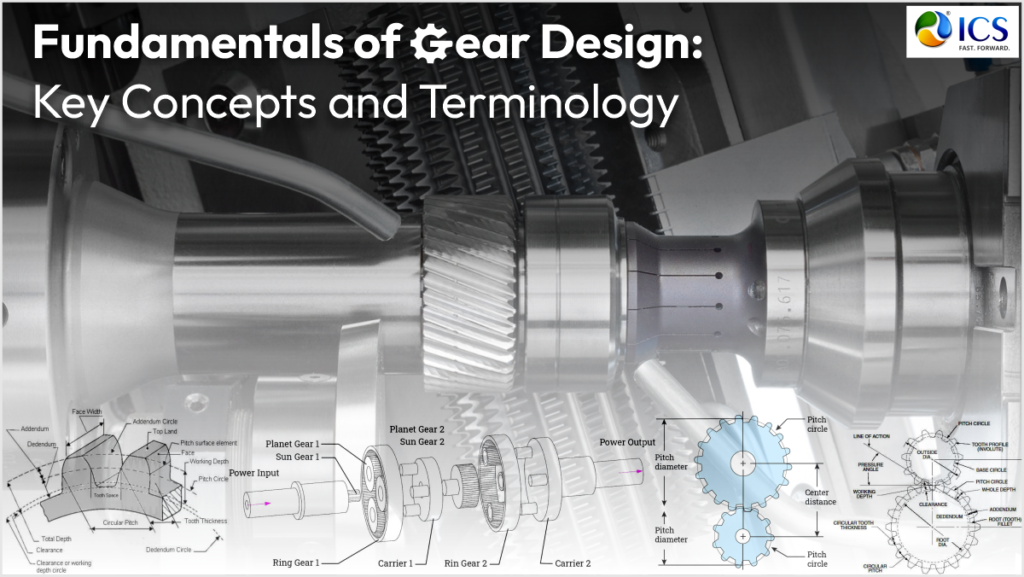
Gears remain the silent force behind modern machines, transmitting motion, managing torque, and keeping industries running efficiently. But as performance demands grow across automotive, aerospace, industrial automation, and heavy machinery, the limitations of traditional gear materials have become increasingly apparent.
The next generation of technologies is redefining performance benchmarks, enabling higher durability, lower friction, longer operational life, and improved efficiency across mission-critical applications.
1. Why Traditional Gear Materials Are No Longer Enough
For decades, gears were predominantly machined from steels such as 4140, 8620, and 4340, which were reliable alloys known for their strength and heat-treatment flexibility. However, today’s operating conditions demand more than what these conventional materials can deliver.
Engineering teams often encounter OEMs facing challenges such as:
- Excessive wear under high load
- Fatigue failure under cyclic stress
- Noise and vibration issues
- Corrosion in humid or chemical environments
- Reduced lifespan in high-speed systems
These issues highlight the industry’s need for materials and coatings that go beyond the capabilities of traditional metallurgy.
2. Advancements in Gear Materials
Global manufacturing clients are transitioning to materials that offer superior wear resistance, fatigue strength, and performance under extreme conditions.
A. Powder Metallurgy (PM) & Sinter-Hardened Materials
PM technology helps manufacturers achieve:
- High-dimensional accuracy
- Uniform density
- Improved fatigue resistance
- Reduced manufacturing cost
Sinter-hardened steels eliminate the need for additional heat treatment, streamlining production while enhancing mechanical performance.
B. Enhanced Carburizing & Nitriding Steels
Metallurgical specialists engineer alloy steels optimized for deeper case hardening and improved surface strength.
These upgraded materials offer:
- Better pitting resistance
- Higher contact fatigue endurance
- Enhanced thermal stability
Ideal for automotive transmissions and heavy-load gearboxes, these materials extend component life while reducing maintenance downtime.
C. Advanced Stainless Steels
High-nitrogen and precipitation-hardened stainless steels are used for environments where corrosion resistance is critical, such as marine machinery and chemical processing equipment.
Benefits include:
- High strength-to-weight ratio
- Superior resistance to corrosive wear
- Longer operational cycles
D. Polymer & Composite Gear Materials
ICompanies are now evaluating reinforced polymers and composite gears for lightweight, low-noise, and cost-effective applications. These materials provide:
- Natural damping properties
- Self-lubricating behavior
- Lower friction and quieter operation
Ideal for consumer electronics, automation systems, and precision equipment.
3. Innovations in Gear Coatings for Superior Performance
Beyond material selection, strong emphasis is placed on surface engineering, which is a crucial factor in determining gear longevity and efficiency.
A. DLC (Diamond-Like Carbon) Coatings
ICS integrates DLC coatings into high-performance gear designs to provide:
- Ultra-low friction
- High hardness
- Reduced wear and scuffing
- Improved energy efficiency
DLC-coated gears run cooler, last longer, and maintain performance in boundary lubrication environments.
B. PVD & CVD Performance Coatings
ICS engineers apply advanced PVD and CVD coatings such as TiN, TiAlN, and CrN to reduce abrasive wear and protect gears in high-load, high-temperature applications.
These coatings help prevent common failures like:
- Micro-pitting
- Surface scuffing
- Thermal degradation
C. Corrosion-Resistant Coatings
For harsh environments, ICS helps clients implement coatings such as zinc-nickel, phosphate layers, and ceramic epoxies — delivering long-term durability without compromising fatigue strength.
D. Laser Surface Transformation Hardening
Laser hardening technology is now being used to improve surface hardness while maintaining a ductile core. This technique is widely used in aerospace and industrial gear manufacturing for its precision and repeatability.
4. AI & Simulation for Smarter Gear Design
A major current advantage is the integration of AI-driven analysis and digital simulation into gear engineering, which helps to-
- Predict fatigue life
- Model thermal and friction behavior
- Simulate extreme loading
- Optimize coating-material combinations
- Reduce design cycles and prototyping cost
This enables manufacturers to transition from guesswork to data-backed engineering decisions, improving both performance and cost-efficiency.
5. The Future of Gear Technology:
Research is ongoing and trying to integrate next-generation solutions, including:
- Nanostructured coatings with ultra-high endurance
- Hybrid composite-metal gear structures
- Self-lubricating intelligent surfaces
- Bio-inspired material architectures
- AI-driven predictive maintenance for gear systems
These innovations will enable gear systems that operate with minimal friction, zero unplanned failures, and dramatically extended service life.
Final Thoughts
As industries demand higher performance and longevity from mechanical systems, traditional materials alone can no longer keep up. Advanced materials and engineered surface technologies are unlocking new levels of capability.
From material selection and coating engineering to AI-driven simulation and full-scale manufacturing support, ICS helps deliver end-to-end gear design expertise that ensures gear components perform reliably under the toughest conditions. Talk to one of our experts to get your gear design up and running.